
How Much Fat Should I Eat Daily? A Guide to Healthy Fat Intake
Learn how to calculate your daily fat intake based on total calories, typically ranging from 20-35% of your daily energy needs, focusing on healthy unsaturated fats.
Written by the Nutrition Tutor Academy teaching team from 3 primary sources. How we source →
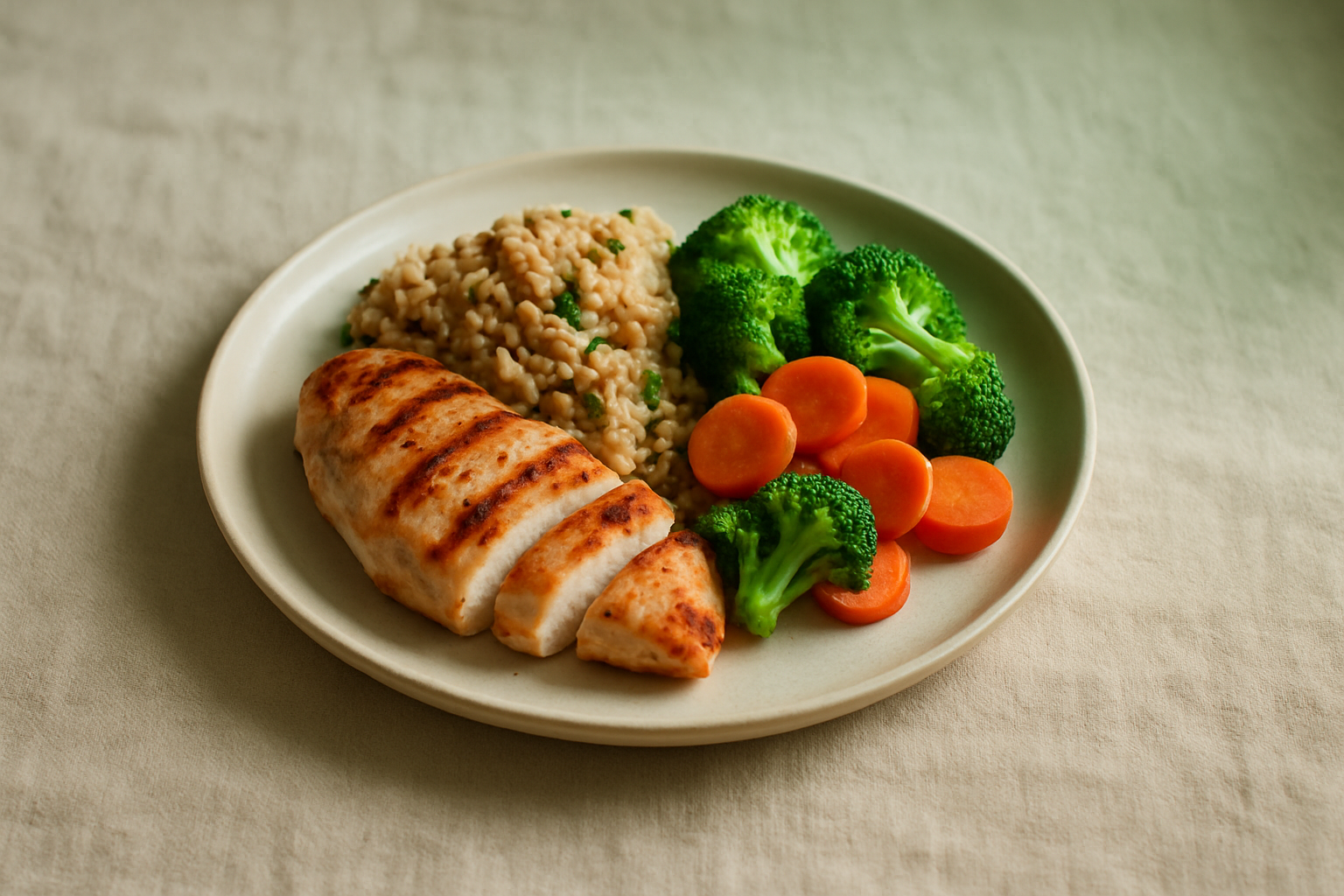
Quick answer: For most healthy adults, daily fat intake should comprise 20-35% of total caloric intake. This percentage translates to approximately 44-78 grams of fat per day for someone consuming 2,000 calories. Prioritizing unsaturated fats found in foods like avocados, nuts, seeds, and olive oil is important for supporting overall health, while limiting saturated and trans fats.
Quick facts
- General recommendation: 20-35% of daily calories from fat.
- For a 2,000-calorie diet, this means 44-78 grams of fat daily.
- Fat provides 9 calories per gram, making it energy-dense.
- Focus on unsaturated fats (monounsaturated and polyunsaturated).
- Limit saturated fat to less than 10% of daily calories.
- Trans fats should be avoided or consumed minimally.
Fat is a vital macronutrient that plays numerous critical roles in the body, from energy storage and hormone production to aiding in the absorption of fat-soluble vitamins (A, D, E, K). However, the amount and type of fat consumed can significantly impact health.
What is the recommended daily fat intake percentage?
For most healthy adults, the Acceptable Macronutrient Distribution Range (AMDR) for fat is 20-35% of total daily calories, set by the National Academies' Dietary Reference Intakes (Summary Report of the Dietary Reference Intakes). This range helps ensure adequate intake of essential fatty acids while managing overall calorie intake. For example, if you consume 2,000 calories per day, 20% of your calories from fat would be 400 calories (2000 * 0.20), and 35% would be 700 calories (2000 * 0.35).
How many grams of fat is that per day?
To convert caloric fat intake into grams, remember that fat provides about 9 calories per gram - the value the FDA uses on the Nutrition Facts label (How to Understand and Use the Nutrition Facts Label). Every gram figure below is an estimate, not a personal prescription. Using the example of a 2,000-calorie diet:
- At 20% fat: 400 calories from fat / 9 calories/gram = approximately 44 grams of fat.
- At 35% fat: 700 calories from fat / 9 calories/gram = approximately 78 grams of fat.
So, for a 2,000-calorie daily diet, the recommended fat intake would be between 44 and 78 grams. Individual needs may vary based on activity level, health goals, and other dietary considerations.
What are the different types of fat and their importance?
Not all fats are created equal. It's important to differentiate between the types of dietary fats:
- Unsaturated Fats: These are considered "healthy fats" and include monounsaturated and polyunsaturated fats (like omega-3 and omega-6 fatty acids). They are found in foods such as olive oil, avocados, nuts, seeds, and fatty fish. The Dietary Guidelines for Americans recommend replacing saturated fat with unsaturated fat from sources such as vegetable oils, nuts, seeds and seafood (Dietary Guidelines for Americans, 2020-2025). See also Dietary Fats - MedlinePlus.
- Saturated Fats: Found primarily in animal products (e.g., red meat, butter, cheese) and some tropical oils (e.g., coconut oil, palm oil). While a small amount is part of a balanced diet, the Dietary Guidelines for Americans recommend limiting saturated fat to less than 10% of total daily calories (Dietary Guidelines for Americans, 2020-2025).
- Trans Fats: These are typically industrially produced (partially hydrogenated oils) and are found in some processed foods, baked goods, and fried items. The FDA determined that partially hydrogenated oils, the main dietary source of artificial trans fat, are no longer generally recognized as safe in food (FDA - Trans Fat).
How can I calculate my daily fat intake?
Here’s a step-by-step example for calculating your daily fat target:
- Determine your total daily calorie needs: This can be estimated using online calculators based on age, sex, weight, height, and activity level. Let's assume an individual needs 2,200 calories per day.
- Choose your target fat percentage: A common recommendation is 25% for a balanced diet.
- Calculate calories from fat: 2,200 calories * 0.25 = 550 calories from fat.
- Convert calories to grams of fat: 550 calories / 9 calories/gram = approximately 61 grams of fat.
This means the individual would aim for about 61 grams of fat per day, with most coming from unsaturated sources.
Are there specific fat recommendations for active individuals or athletes?
Active individuals or athletes may require fat intake at the higher end of the 20-35% range, or even slightly above, to meet their increased energy demands and support recovery. Fat is a concentrated energy source, providing more than double the calories per gram compared to carbohydrates or protein. It also plays a role in hormone regulation, which is important for adaptation to training. However, extremely low-fat diets (below 15% of calories) may compromise health and performance, while very high-fat diets might displace carbohydrates and proteins essential for high-intensity exercise and muscle repair.
It is always advisable to consult with a registered dietitian or healthcare professional for personalized dietary guidance, especially if you have specific health conditions or athletic goals. They can help tailor recommendations to your individual needs and ensure a balanced and appropriate macronutrient distribution.
Key takeaways
- 01The Dietary Reference Intakes put fat at 20-35% of daily calories for most healthy adults - roughly 44-78 g on a 2,000-calorie estimate.
- 02Fat supplies about 9 calories per gram, the value used on the Nutrition Facts label.
- 03The Dietary Guidelines for Americans recommend keeping saturated fat under 10% of daily calories and replacing it with unsaturated fat.
- 04The FDA no longer recognizes partially hydrogenated oils (artificial trans fat) as safe in food.
- 05These are general estimates for education, not a medical prescription; individual needs vary, so talk to a qualified professional for personal guidance.
Frequently asked
What is the minimum amount of fat I should eat daily?+
Consuming less than 20% of your daily calories from fat, or less than approximately 20-25 grams for most adults, may lead to nutrient deficiencies and health issues, as fat is essential for many bodily functions.
Can eating too much fat be bad for me?+
Excessive intake of unhealthy fats (saturated and trans fats) can contribute to cardiovascular concerns. Consuming too much fat, even healthy fats, can also lead to excess calorie intake and potential weight gain if not balanced with energy expenditure.
Are there good fats and bad fats?+
Yes, generally unsaturated fats (monounsaturated and polyunsaturated) are considered 'good fats' that support health, while trans fats are considered 'bad fats' to avoid. Saturated fats are best consumed in moderation.
How can I increase my intake of healthy fats?+
Incorporate foods like avocados, nuts (almonds, walnuts), seeds (chia, flax, sunflower), olive oil, fatty fish (salmon, mackerel), and nut butters into your diet.
Does fat make you gain weight?+
Fat is calorie-dense, providing 9 calories per gram. Consuming more calories than your body expends, regardless of the source, can lead to weight gain. A balanced intake of all macronutrients is key for weight management.
What is the role of fat in hormone production?+
Dietary fats, particularly cholesterol, serve as precursors for many hormones, including steroid hormones like estrogen, testosterone, and cortisol. Adequate fat intake is therefore important for maintaining hormonal balance.
Sources
Every lesson is drafted from primary sources - official announcements, vendor blogs, and reputable industry reporting - then edited by our pipeline.
More on Macros & Energy
See all →Jan 1, 1970
Carb Cycling Explained: A Guide to Strategic Carbohydrate Intake
This lesson explains carb cycling, a dietary strategy that varies carbohydrate intake daily or weekly to support fitness and health goals, differentiating between high-carb and low-carb days.
Jan 1, 1970
How Many Carbs Should I Eat? A Guide to Daily Carbohydrate Intake
Learn how to determine your ideal daily carbohydrate intake based on your energy needs, activity level, and health goals, ranging from general recommendations to specific dietary approaches.
Jan 1, 1970
High-Protein Foods for Weight Loss: Your Essential Guide
Discover how incorporating high-protein foods can support weight loss by enhancing satiety, preserving muscle, and boosting metabolism.
Jan 1, 1970
How Many Grams of Protein Are in an Egg?
This lesson details the typical protein content of an egg, factors influencing it, and how to incorporate eggs into a protein-rich diet.
Free account
Want to go deeper?
Sign up free to unlock the full daily industry feed, save posts and articles to your library, and chat with the coach about anything you read.