
How Many Calories Are in a Gram of Protein?
This lesson explains that protein provides approximately 4 calories per gram and how this value fits into understanding your daily nutritional needs.
Written by the Nutrition Tutor Academy teaching team from 1 primary source. How we source →
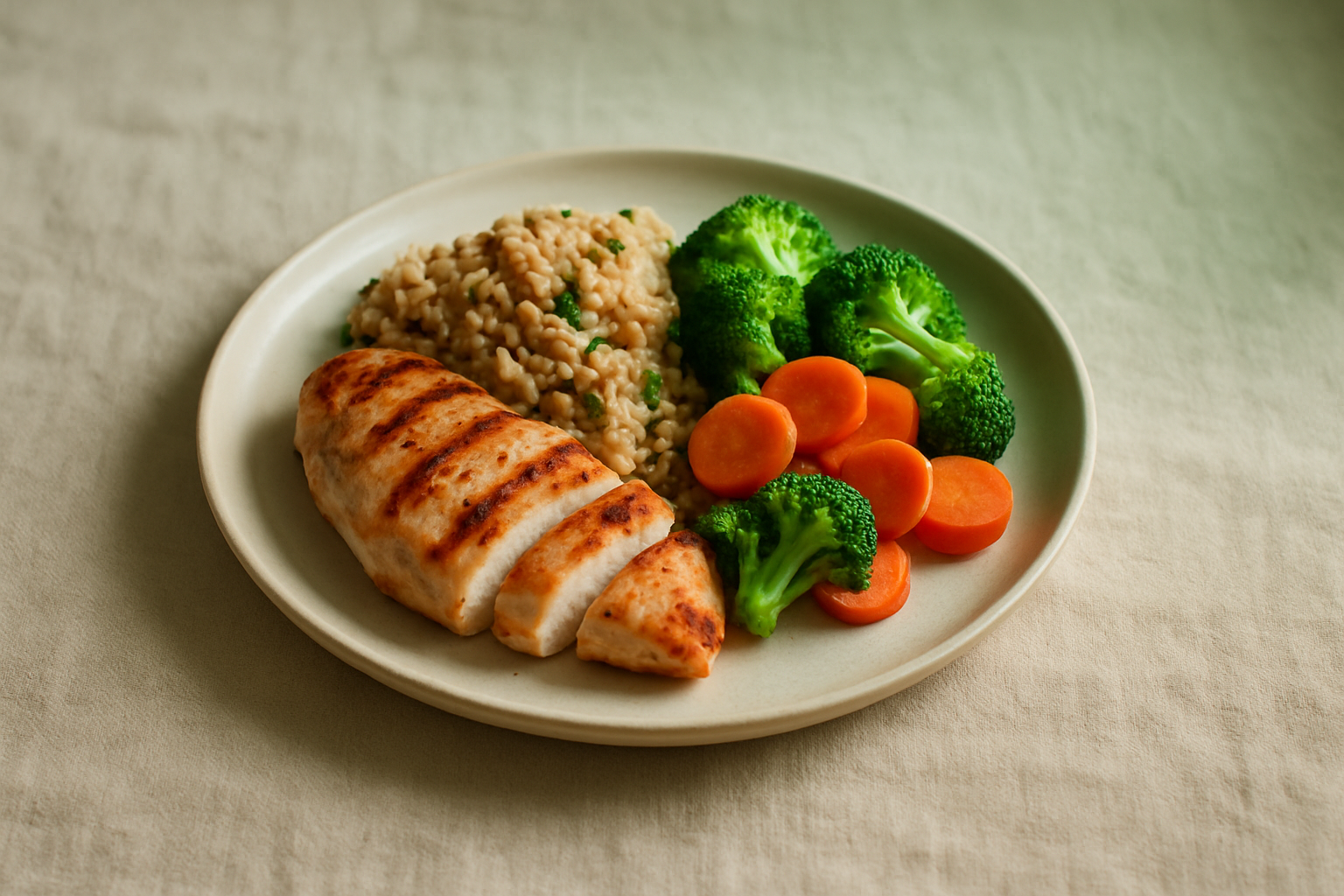
Quick answer: One gram of protein contains approximately 4 calories. This value is a standard measure used in nutrition to help calculate the total energy content of foods and diets. Along with carbohydrates, which also provide 4 calories per gram, protein is a primary macronutrient contributing to the body's energy supply and essential functions.
Quick facts
- Protein provides approximately 4 calories per gram.
- This is a standard value used in nutrition science.
- Carbohydrates also provide 4 calories per gram, while fats provide 9 calories per gram.
- Protein is essential for building and repairing tissues, and producing enzymes and hormones.
- Understanding protein's caloric value helps in calculating total daily energy intake.
Understanding the caloric density of macronutrients is a cornerstone of nutrition education. For protein, this means recognizing its contribution to your body's energy supply and its role in various physiological processes.
What is a Calorie, and How Does it Relate to Protein?
A calorie is a unit of energy. In nutrition, the 'calorie' (often capitalized as 'Calorie' or 'kilocalorie') refers to the amount of energy needed to raise the temperature of 1 kilogram of water by 1 degree Celsius. When we consume food, our bodies extract this stored energy to fuel bodily functions, movement, and repair. Protein is one of three macronutrients—alongside carbohydrates and fats—that supply these calories.
Specifically, one gram of protein yields approximately 4 calories of energy when metabolized by the body. This figure is a widely accepted average used for calculating the nutritional content of foods and for dietary planning.
Why Does Protein Provide 4 Calories Per Gram?
The caloric value of macronutrients is determined by their chemical structure and how efficiently the human body can break them down and utilize their energy. The 4 calories per gram for protein is an average determined through calorimetry experiments, which measure the heat released when food is burned. While slight variations exist depending on the specific amino acid composition of a protein, 4 calories per gram is the standard value used for general nutritional purposes.
For comparison, carbohydrates also provide 4 calories per gram, whereas fats are more energy-dense, providing about 9 calories per gram. Alcohol provides approximately 7 calories per gram. These values are often referred to as Atwater factors.
How Do I Use This Information to Calculate Calories from Protein?
Calculating the calories from protein in a food item or meal is straightforward once you know the protein content. Simply multiply the number of grams of protein by 4. This calculation is essential for tracking your macronutrient intake, whether you're aiming for a specific protein target or managing your total daily caloric intake.
Worked Example:
Let's say a serving of Greek yogurt contains 17 grams of protein. To find out how many calories from protein are in that serving, you would perform the following calculation:
17 grams of protein × 4 calories/gram = 68 calories from protein.
If a nutrition label states that a chicken breast contains 30 grams of protein, then:
30 grams of protein × 4 calories/gram = 120 calories from protein.
This simple multiplication allows you to easily assess the energy contribution of protein in your diet.
What Are the Key Functions of Protein Beyond Calories?
While protein provides energy, its primary roles in the body extend far beyond just caloric contribution. Protein is crucial for:
- Building and repairing tissues: It's a fundamental component of muscles, organs, skin, hair, and nails.
- Enzyme and hormone production: Many enzymes, which catalyze biochemical reactions, and hormones, which regulate bodily processes, are proteins.
- Immune function: Antibodies, which fight off infections, are proteins.
- Transport and storage: Proteins help transport substances like oxygen, vitamins, and minerals throughout the body and can store nutrients.
- Fluid balance: Proteins help maintain the proper fluid balance in the body.
Given these vital functions, ensuring adequate protein intake is important for overall health, even for those not specifically focused on muscle building. For example, research on various dietary patterns and their impact on health often considers protein intake, as highlighted in studies discussing macronutrient composition, such as those evaluating the effects of different diets on markers like apolipoprotein B and lipoprotein(a) Source. This context underscores the broad importance of protein in dietary considerations, irrespective of its specific caloric value.
How Much Protein Do I Need Daily?
Protein needs can vary significantly based on factors such as age, activity level, health status, and goals. The Recommended Dietary Allowance (RDA) for protein for a typical healthy adult is 0.8 grams of protein per kilogram of body weight per day. However, athletes, older adults, and individuals with certain health conditions may require higher amounts, sometimes ranging from 1.2 to 2.0 grams per kilogram of body weight or more. It is always recommended to consult with a qualified healthcare professional or registered dietitian to determine your specific protein needs.
Key takeaways
- 01One gram of protein provides approximately 4 calories of energy.
- 02This value is a standard measure used for nutrition calculations and food labeling.
- 03Protein is vital for tissue repair, enzyme production, immune function, and more, in addition to providing energy.
- 04To calculate calories from protein, multiply the protein grams by 4.
- 05Individual protein needs vary based on age, activity level, and health goals.
Frequently asked
Is the 4 calories per gram for protein exact?+
The 4 calories per gram is an average approximation used for nutrition labeling and general dietary guidance. Slight variations can occur based on the specific amino acids in the protein source, but 4 calories per gram is the widely accepted standard.
How does protein's caloric value compare to other macronutrients?+
Protein and carbohydrates both provide approximately 4 calories per gram. Fat is more energy-dense, providing about 9 calories per gram. Alcohol provides approximately 7 calories per gram.
Why is it important to know the caloric value of protein?+
Knowing this value helps you accurately calculate your total daily caloric intake, understand nutrition labels, and plan meals that meet your specific dietary goals, whether for weight management, muscle growth, or overall health.
Does cooking protein change its caloric value?+
Cooking methods generally do not change the inherent caloric value per gram of protein itself. However, adding fats or carbohydrates during cooking (e.g., oils, sauces) will increase the overall calorie count of the prepared food.
Is protein primarily an energy source?+
While protein does provide energy (calories), its primary roles in the body are structural, enzymatic, hormonal, and related to transport and immune function. It's considered an energy source, but it's more crucial for building and repair than for immediate fuel compared to carbohydrates or fats.
Can I eat too much protein?+
While protein is essential, excessive intake can lead to certain health concerns over time, especially for individuals with pre-existing kidney conditions. It's always best to consume protein within recommended ranges and consult a healthcare professional for personalized dietary advice.
Sources
Every lesson is drafted from primary sources - official announcements, vendor blogs, and reputable industry reporting - then edited by our pipeline.
More on Macros & Energy
See all →Jan 1, 1970
Carb Cycling Explained: A Guide to Strategic Carbohydrate Intake
This lesson explains carb cycling, a dietary strategy that varies carbohydrate intake daily or weekly to support fitness and health goals, differentiating between high-carb and low-carb days.
Jan 1, 1970
High-Protein Foods for Weight Loss: Your Essential Guide
Discover how incorporating high-protein foods can support weight loss by enhancing satiety, preserving muscle, and boosting metabolism.
Jan 1, 1970
How Many Grams of Protein Are in an Egg?
This lesson details the typical protein content of an egg, factors influencing it, and how to incorporate eggs into a protein-rich diet.
Jan 1, 1970
Best Sources of Healthy Fats for a Heart-Healthy Diet
This lesson details the best sources of healthy fats, focusing on plant-based options like olive oil, seed oils, nuts, and avocados, which may support heart health and maintain healthy cholesterol levels.
Free account
Want to go deeper?
Sign up free to unlock the full daily industry feed, save posts and articles to your library, and chat with the coach about anything you read.