
What is a Caloric Deficit?
Learn how a caloric deficit works, why it's a key principle for weight management, and how to calculate your individual needs.
Written by the Nutrition Tutor Academy teaching team from 1 primary source. How we source →
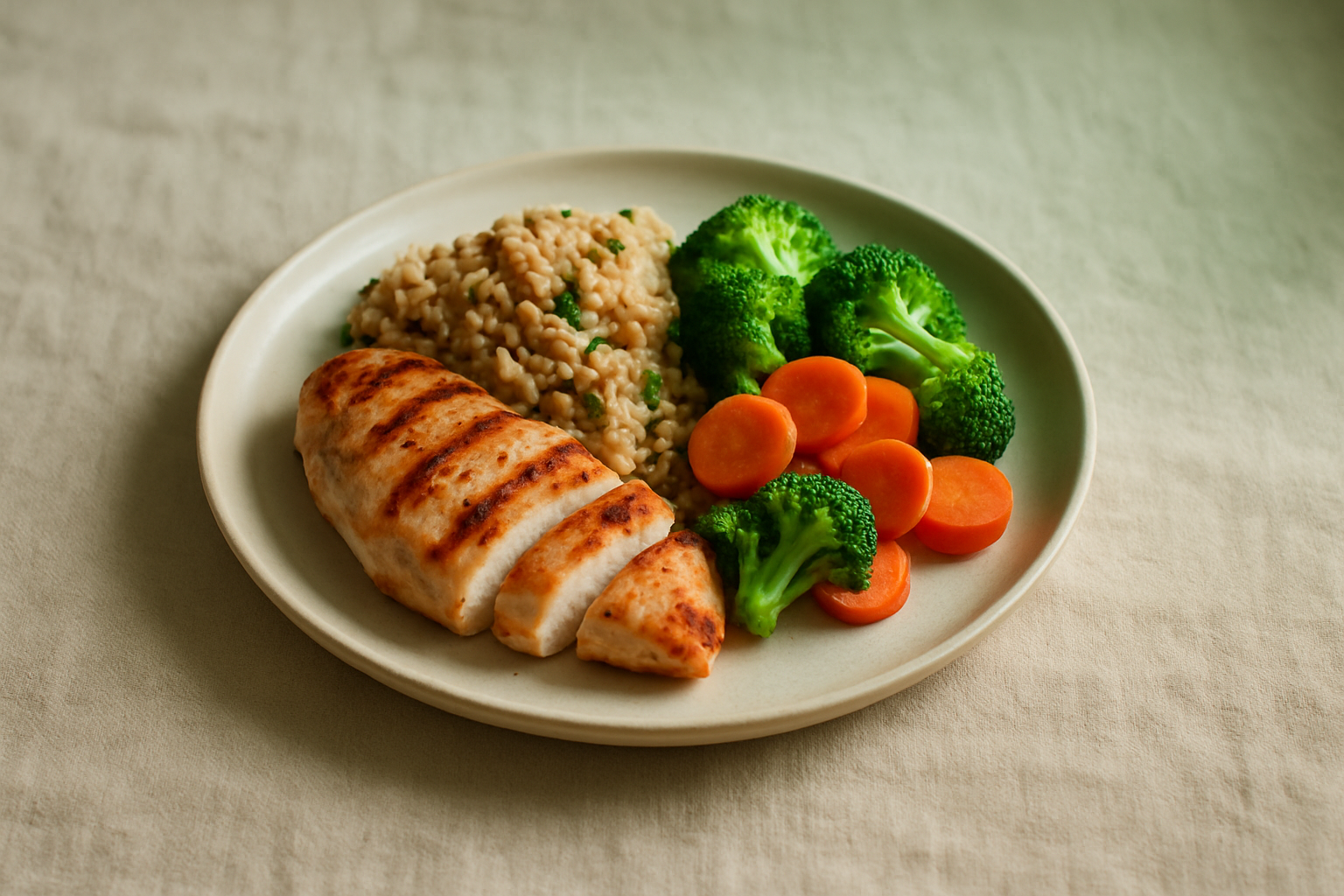
Quick answer: A caloric deficit occurs when you consistently consume fewer calories than your body expends over a period of time. This energy imbalance forces your body to use stored energy, primarily from fat reserves, to meet its needs, leading to weight loss. It is a fundamental principle for managing body weight and achieving fat loss goals.
Quick facts
- A caloric deficit means consuming fewer calories than your body burns daily.
- It is the primary mechanism by which the body loses weight, particularly fat mass.
- Your Basal Metabolic Rate (BMR) and activity level determine total daily energy expenditure (TDEE).
- A moderate deficit, typically 300-500 calories below TDEE, is often recommended for sustainable loss.
- Achieving a deficit involves adjusting food intake, increasing physical activity, or both.
A caloric deficit is a foundational concept in nutrition and weight management. It's the state where the energy you take in from food and beverages is less than the energy your body uses for all its functions.
How Does a Caloric Deficit Work?
Your body constantly burns calories to power essential functions like breathing, circulation, and cell repair (known as your Basal Metabolic Rate, or BMR), as well as physical activity. When you consistently eat fewer calories than your body uses, your body must turn to its stored energy reserves to make up the difference. These reserves are primarily fat and, to a lesser extent, muscle glycogen. Over time, this process leads to a reduction in body weight, especially fat mass, as your body mobilizes stored fat for energy.
How Do I Calculate My Caloric Needs?
Calculating your individual caloric needs involves two main components: your Basal Metabolic Rate (BMR) and your Total Daily Energy Expenditure (TDEE). Your BMR is the number of calories your body burns at rest. Various formulas can estimate BMR, such as the Mifflin-St Jeor equation. Your TDEE then accounts for your BMR plus the calories burned through physical activity and the thermic effect of food (digestion). Online calculators often incorporate these factors. For example, if your BMR is 1,500 calories and you have a moderately active lifestyle, your TDEE might be around 2,250 calories per day.
What Is a Moderate Caloric Deficit?
A moderate caloric deficit is typically considered to be 300 to 500 calories below your TDEE. This range is often recommended for sustainable and healthy weight loss. A deficit of 500 calories per day, for instance, could lead to a loss of about one pound per week, as one pound of fat is roughly equivalent to 3,500 calories. Larger deficits might lead to faster initial weight loss but can be harder to sustain and may increase the risk of nutrient deficiencies or muscle mass loss. It's important to consult with a qualified health professional to determine an appropriate deficit for your specific health goals and circumstances.
Can Diet Alone Create a Caloric Deficit?
Yes, a caloric deficit can be created solely through dietary changes. By making conscious choices to reduce calorie intake – for example, by choosing lower-calorie foods, reducing portion sizes, or limiting high-calorie snacks and sugary drinks – you can consume fewer calories than your body expends. However, combining dietary adjustments with increased physical activity is often the most effective and sustainable approach. Exercise not only burns calories but also helps preserve muscle mass during weight loss and offers numerous other health benefits.
Worked Example: Creating a Caloric Deficit
Let's consider an individual, Sarah, who has a TDEE of 2,200 calories per day. If Sarah wants to lose weight at a moderate pace, she aims for a 500-calorie deficit.
- Step 1: Determine TDEE. Sarah uses an online calculator that estimates her TDEE at 2,200 calories.
- Step 2: Calculate target intake. To achieve a 500-calorie deficit, Sarah subtracts 500 from her TDEE: 2,200 calories - 500 calories = 1,700 calories per day.
- Step 3: Adjust diet and activity. Sarah decides to implement this by:
- Reducing her usual breakfast from 500 calories to 350 calories by swapping out a high-calorie pastry for oatmeal and fruit.
- Swapping a daily sugary soda (150 calories) for water.
- Increasing her daily walking by 30 minutes, which burns approximately 150 calories.
In this example, Sarah created a deficit of (150 + 150) + 150 = 450 calories, close to her 500-calorie target, through both dietary changes and increased activity. These small, consistent changes support her weight loss goal. It is important to note that dietary changes can have varied effects on other health markers, as seen in research on different diets. For instance, some dietary interventions, like the DASH diet, can increase certain lipid markers like lipoprotein(a) while still improving overall cardiovascular risk factors by reducing more significant markers like apolipoprotein B Source. This highlights the complexity of nutritional science beyond just calorie counting.
Key takeaways
- 01A caloric deficit is achieved when calorie intake is less than calorie expenditure, leading to weight loss.
- 02Your Total Daily Energy Expenditure (TDEE) considers your BMR and activity level to determine how many calories you burn.
- 03A moderate deficit (300-500 calories below TDEE) is generally recommended for sustainable weight loss.
- 04Achieve a deficit through mindful eating, increased physical activity, or a combination of both.
- 05Individual needs vary; consult a healthcare professional for personalized guidance on caloric intake.
Frequently asked
What is the difference between a caloric deficit and calorie restriction?+
A caloric deficit is the physiological state where energy intake is less than energy expenditure. Calorie restriction is a dietary strategy used to *achieve* that caloric deficit by intentionally limiting food intake.
How quickly can I lose weight in a caloric deficit?+
A healthy and sustainable rate of weight loss is typically 1-2 pounds per week. This usually corresponds to a daily caloric deficit of 500-1000 calories, depending on your individual starting point and activity level.
Will I lose muscle in a caloric deficit?+
While some muscle loss can occur in a caloric deficit, especially with severe restriction, it can be minimized. Adequate protein intake, strength training, and a moderate deficit help preserve lean muscle mass during weight loss.
Is a caloric deficit always necessary for weight loss?+
Yes, a caloric deficit is always necessary for weight loss. It is the fundamental energy balance principle that dictates whether your body uses stored energy (leading to loss) or stores more energy (leading to gain).
What happens if my caloric deficit is too large?+
An excessively large caloric deficit can lead to negative consequences such as fatigue, nutrient deficiencies, excessive muscle loss, slower metabolism, and an increased risk of developing disordered eating patterns. It's often unsustainable long-term.
Does exercising more automatically create a caloric deficit?+
Exercising more increases your caloric expenditure, which contributes to a caloric deficit. However, if your food intake increases proportionally, you might not be in a deficit. Combining increased exercise with mindful eating is most effective.
Sources
Every lesson is drafted from primary sources - official announcements, vendor blogs, and reputable industry reporting - then edited by our pipeline.
More on Macros & Energy
See all →Jan 1, 1970
Carb Cycling Explained: A Guide to Strategic Carbohydrate Intake
This lesson explains carb cycling, a dietary strategy that varies carbohydrate intake daily or weekly to support fitness and health goals, differentiating between high-carb and low-carb days.
Jan 1, 1970
High-Protein Foods for Weight Loss: Your Essential Guide
Discover how incorporating high-protein foods can support weight loss by enhancing satiety, preserving muscle, and boosting metabolism.
Jan 1, 1970
How Many Grams of Protein Are in an Egg?
This lesson details the typical protein content of an egg, factors influencing it, and how to incorporate eggs into a protein-rich diet.
Jan 1, 1970
Best Sources of Healthy Fats for a Heart-Healthy Diet
This lesson details the best sources of healthy fats, focusing on plant-based options like olive oil, seed oils, nuts, and avocados, which may support heart health and maintain healthy cholesterol levels.
Free account
Want to go deeper?
Sign up free to unlock the full daily industry feed, save posts and articles to your library, and chat with the coach about anything you read.